01
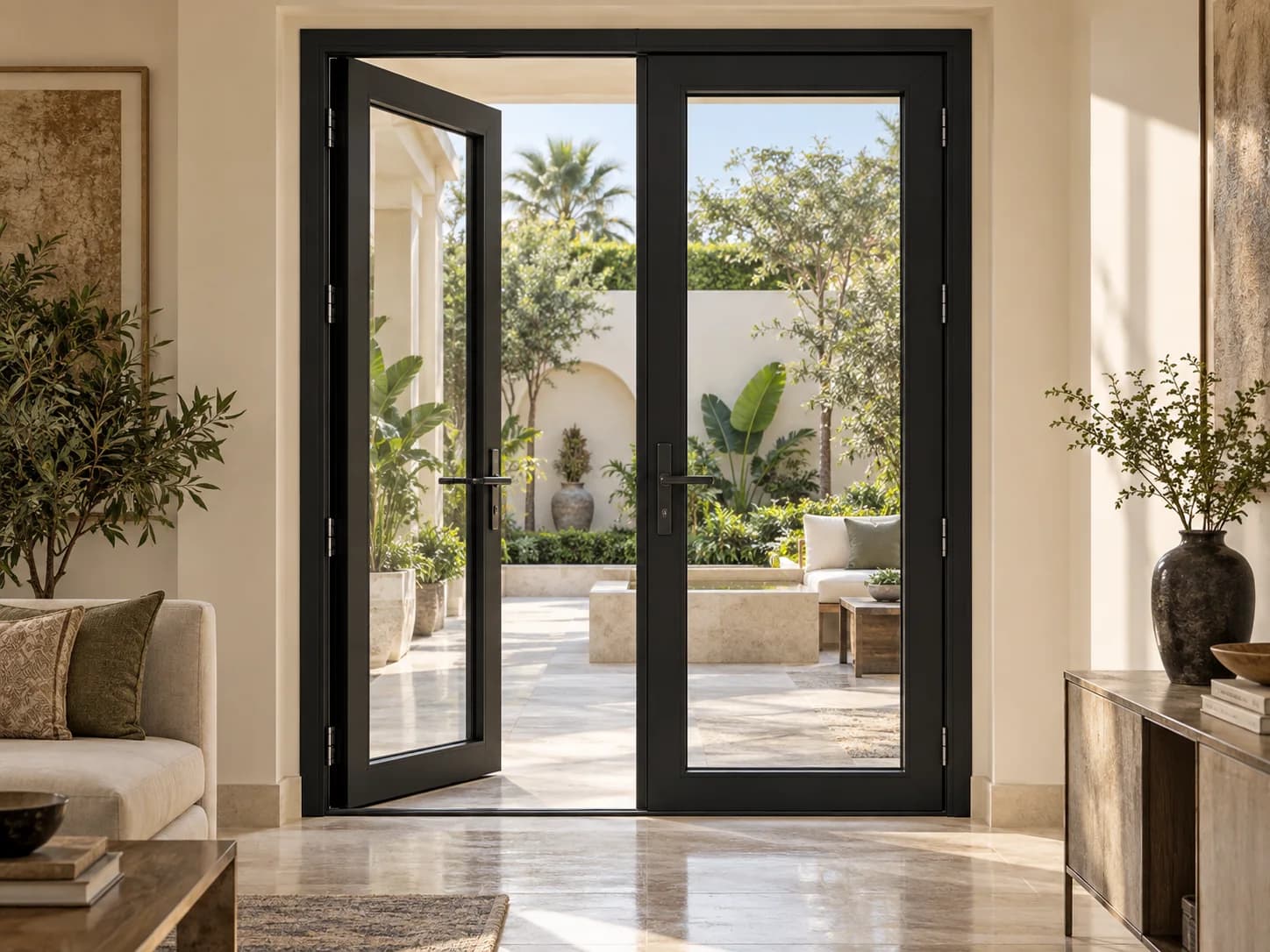
Hinged movement
Casement doors
Single or double-leaf hinged doors with the tightest compression seal we offer.
Consider: They require swing space, and wind can catch an open leaf.
A door is heavy, moves many times a day and carries a lock. We specify the frame, hardware and glass around those three facts.
The right movement for the span. Three ways a door can open, each trading swing space, seal and sash weight differently. The width of the opening usually decides which one is sensible.
Hinged movement
Single or double-leaf hinged doors with the tightest compression seal we offer.
Consider: They require swing space, and wind can catch an open leaf.
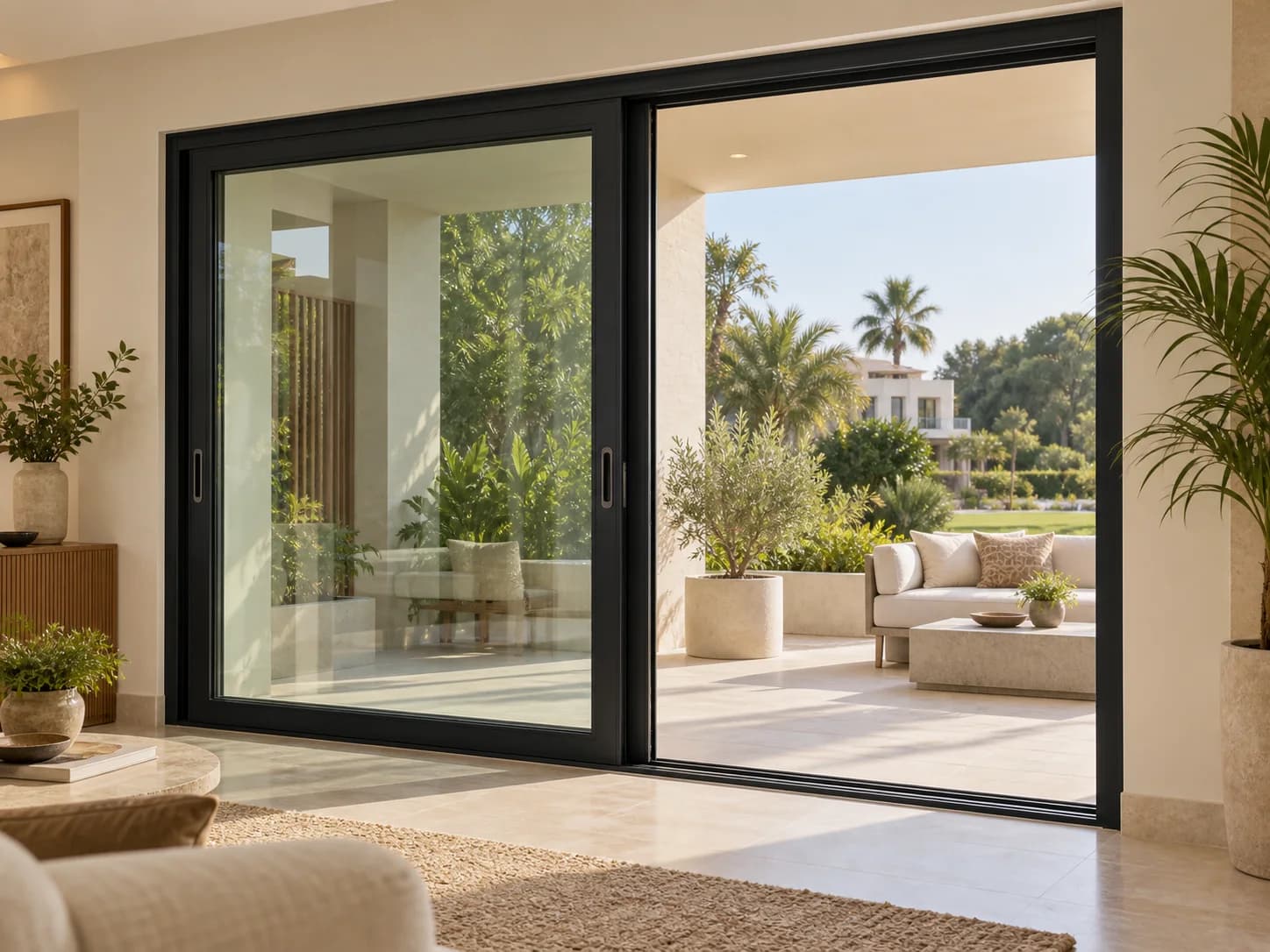
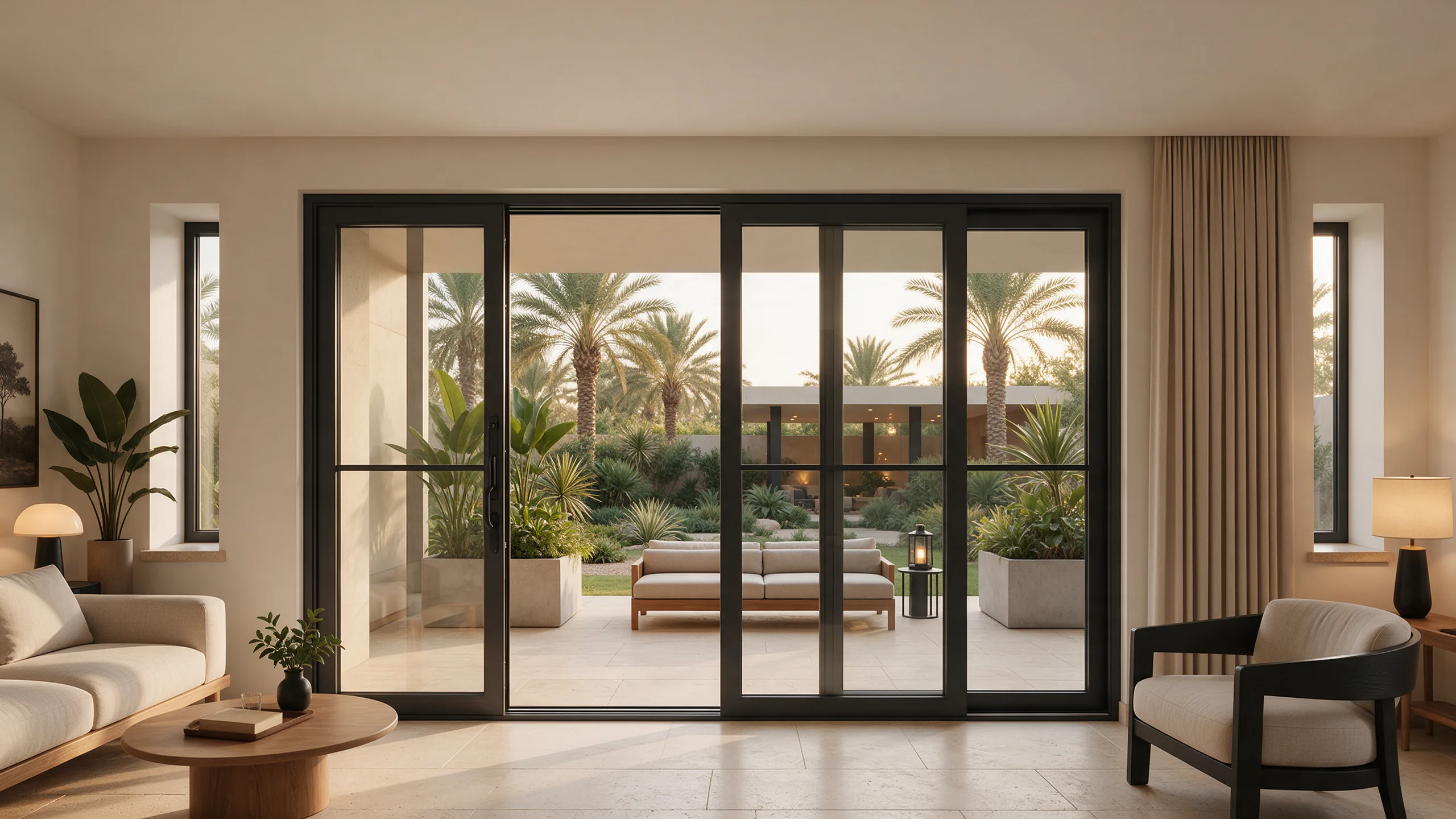
Two or three tracks
Two- and three-track systems for patios and terraces, with no floor space lost.
Consider: The seal is lighter than a casement and wide sashes become heavier to move.

Lift, roll, then seal
A large sash lifts clear of its seals before rolling, then drops back to compress them when closed.
Consider: Its deeper frame, hardware and structural needs should be planned before the opening is built.
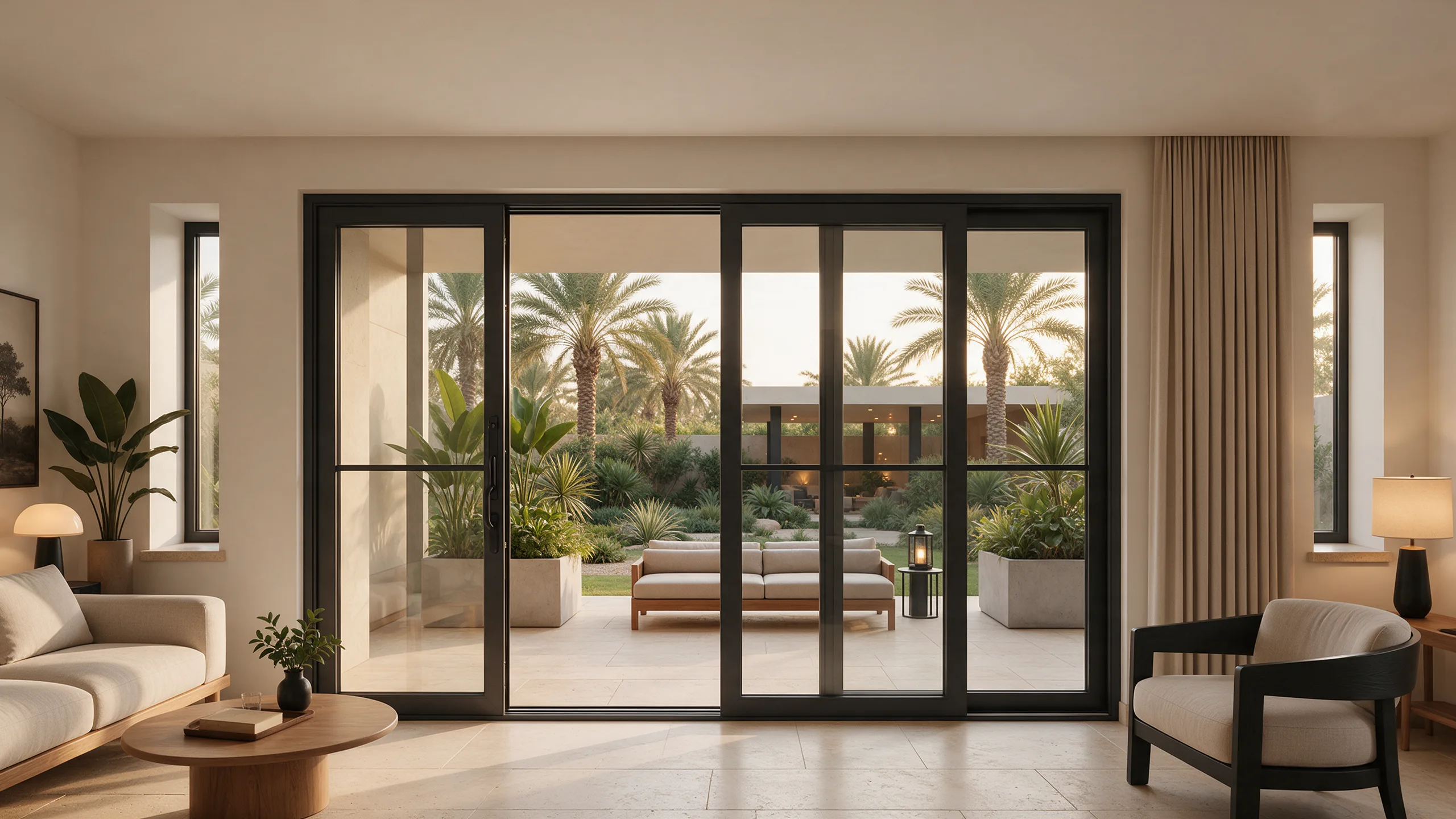
Lift & slide
Turn the handle and the sash lifts clear of its seal, rolling almost weightlessly. Turn it back and the sash drops to compress the seal like a hinged door.
Usually the right answer for a large living space opening onto a lawn or terrace. It is worth discussing before the walls go up.
Discuss the openingDoors wear at the parts that move. Hinges drop, rollers flatten, handles work loose and multipoint locks stop lining up. That is why hardware must be specified to the weight of the leaf.
Hardware is covered for twelve months. After that, we still source and fit replacement parts for anything we installed.
Glass for doors
Double glazing is our main recommendation across every door type: two 6mm panes separated by a sealed 10mm air gap. Single and triple glazing remain available, with 8mm or 12mm spacers where the opening calls for a different build.
The sealed cavity improves thermal insulation by slowing heat transfer and helps reduce outside noise. On large glazed doors, the frame, seals and hardware are specified together so the complete unit performs as intended.
For wide sliding and lift-and-slide openings, an early conversation makes the finished door better—and prevents expensive corrections later.